
This design project focuses on improving features of YouTube Music.



Karaoke

Onboarding

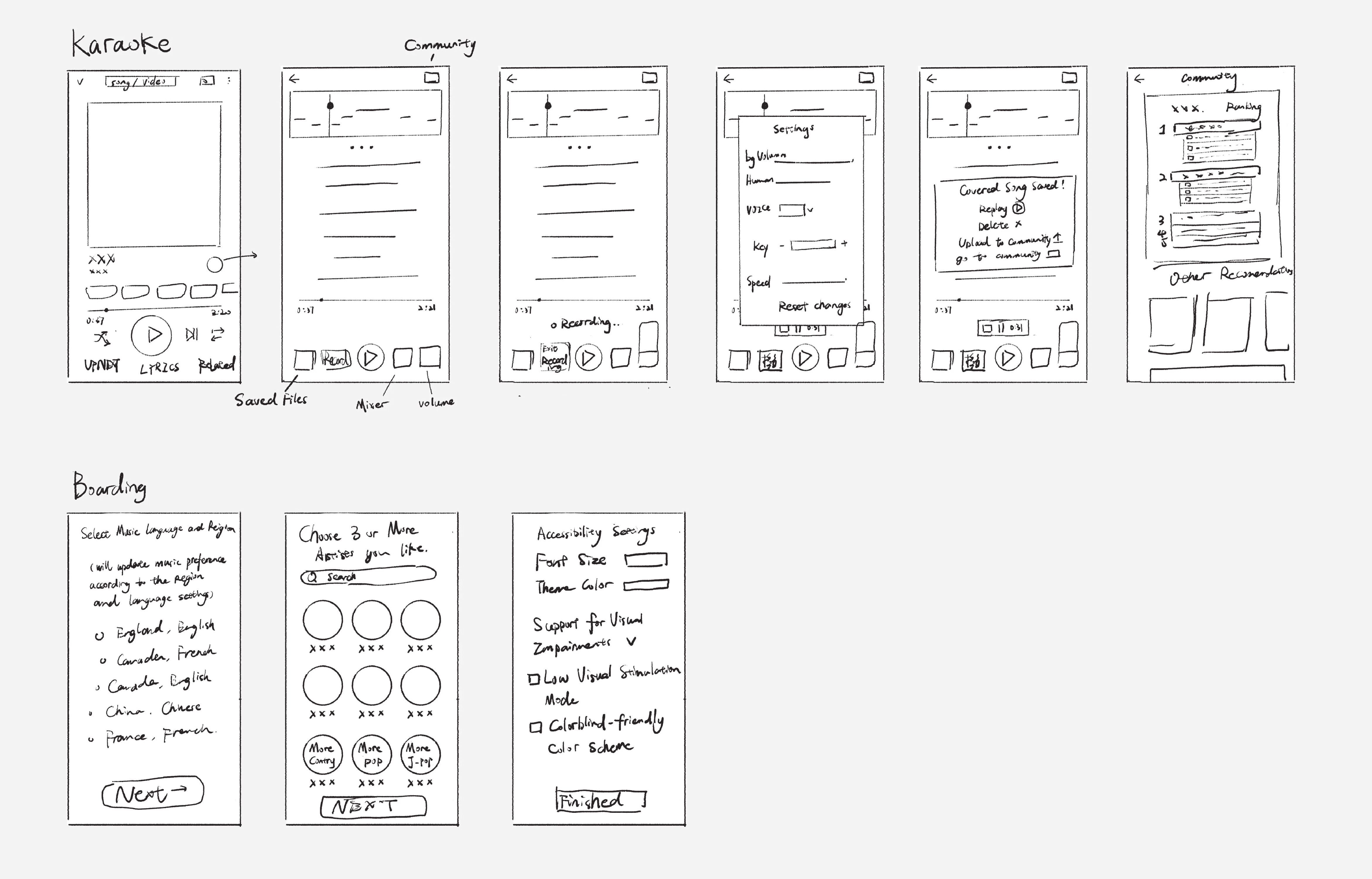
The karaoke feature provides a pathway for emerging artists to gain visibility—from singing to music videos—helping new creators be discovered more quickly. It also integrates naturally with YouTube’s ecosystem: creators can publish content and albums through YouTube Music to attract viewers and increase user engagement.
I enhanced the previous onboarding flow by adding two key elements that were missing: localized artist recommendations based on language and region, and accessibility settings for users with visual needs.
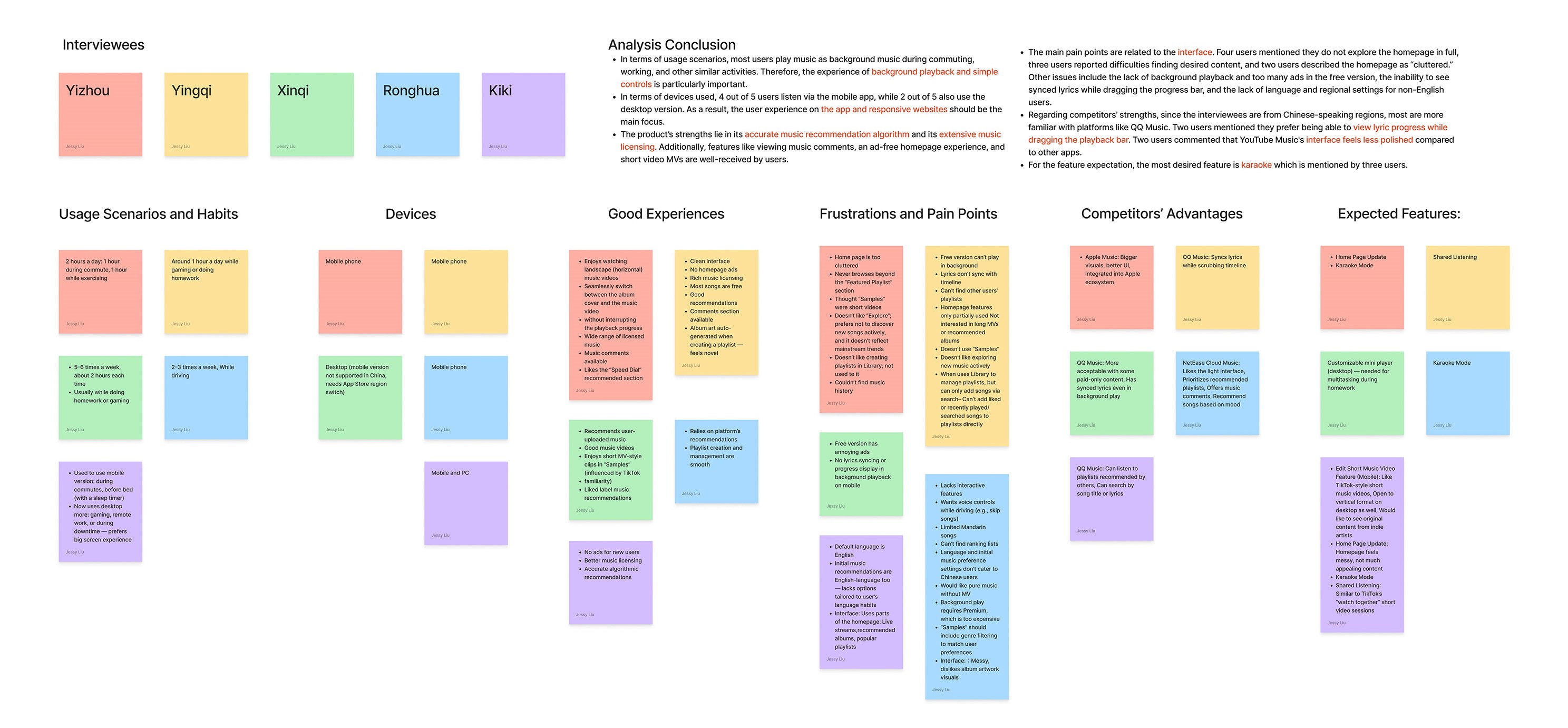
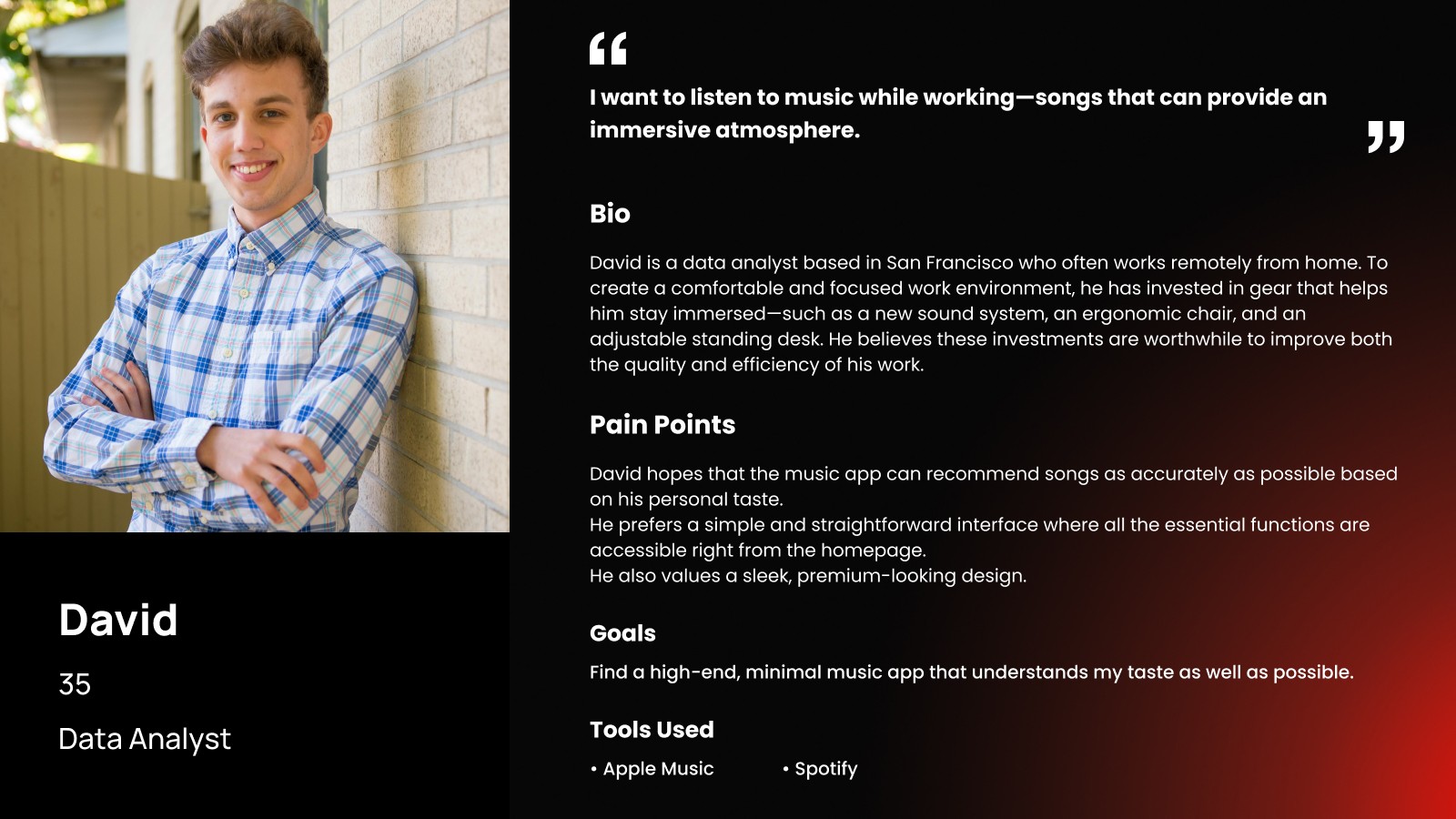
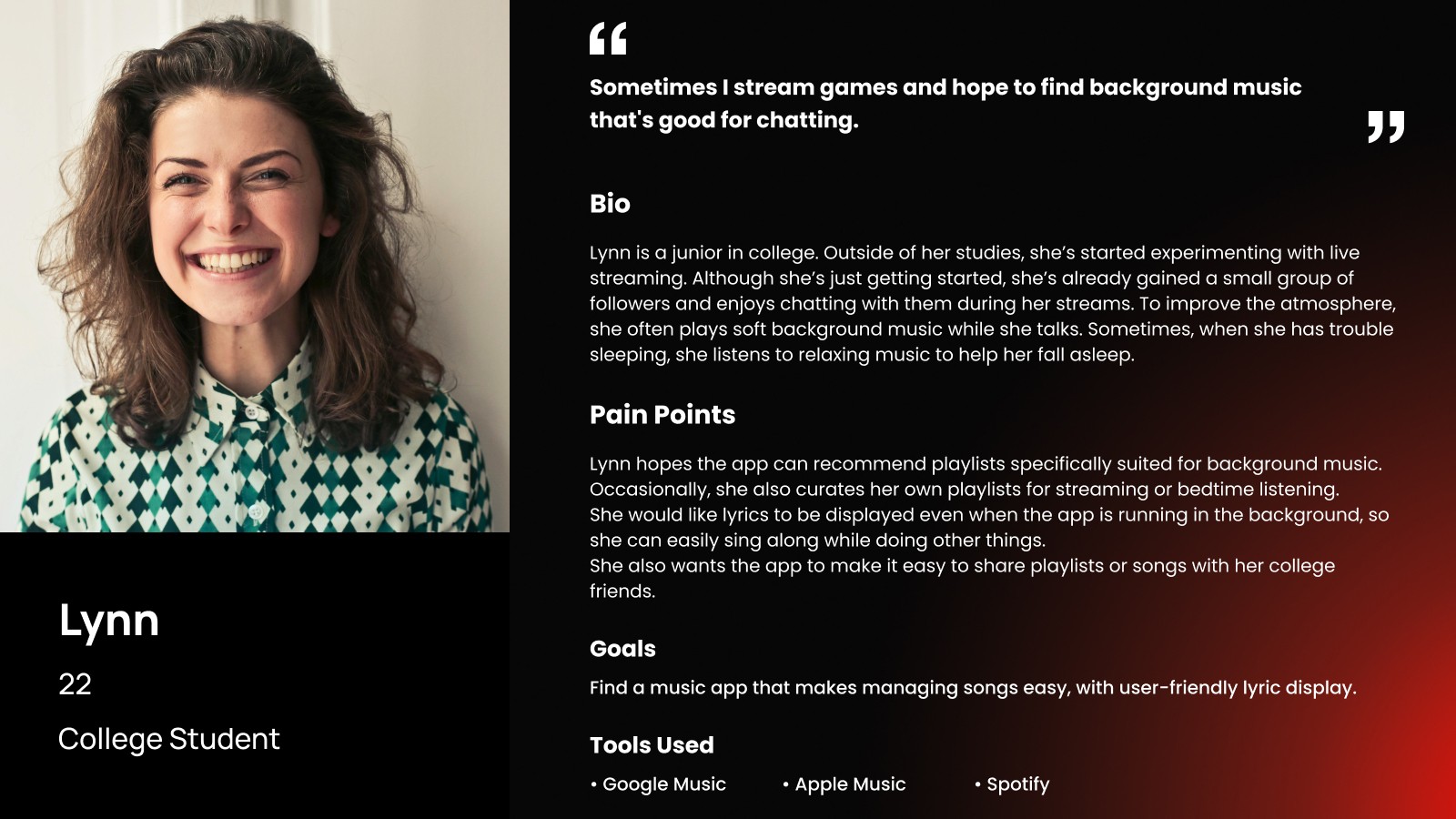
During the research phase, in addition to basic competitor analysis and user interviews, I also explored user pain points through Reddit, Discord, and other online communities. Surprisingly, the insights gathered from these platforms were not highly aligned with my interview findings. I assume this discrepancy is due to the fact that Reddit and Discord communities are largely composed of “Long-time experienced users” who are already loyal to YouTube Music, while the participants around me were mostly “light users” who have switched between YouTube Music, Apple Music, and other platforms. These light users represent the audience YouTube Music most needs to reach in order to expand its market share. For this reason, I prioritized insights from my interview participants in the later stages of the design process.
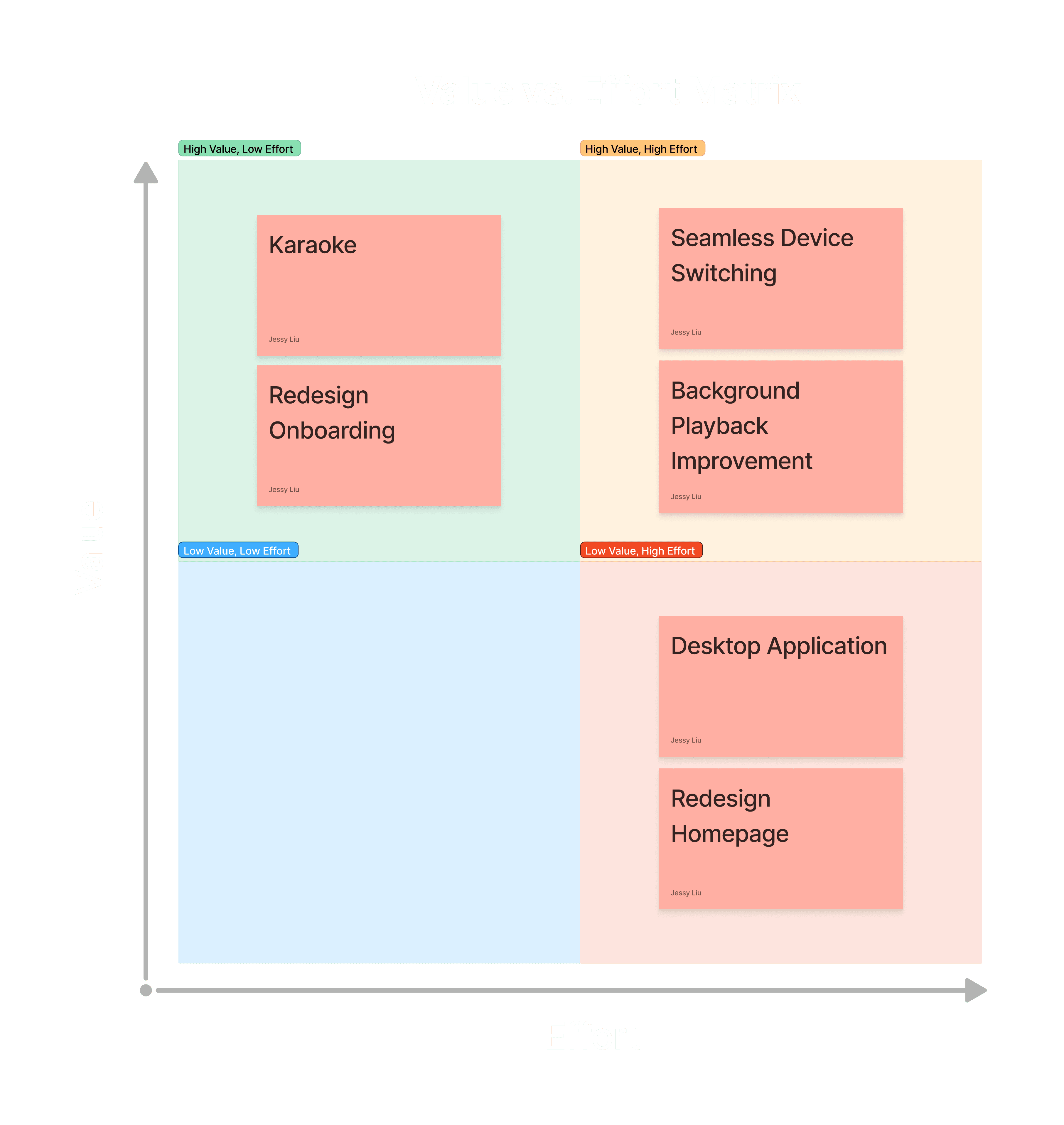
In the feature prioritization phase, I selected “Onboarding Redesign” and “Karaoke Feature” as the focus of this project. Beyond the results of the Value vs. Effort Matrix, the onboarding redesign strengthens accessibility for non-English speakers and visually impaired users. While not the most highly requested feature, it reflects the product’s human-centered values. Meanwhile, the karaoke feature is a popular request and is already offered by competing services. To prevent YouTube Music from falling behind and losing users interested in this feature, I considered it strategically important to elevate its priority.
Although the homepage redesign was the most requested feature during the interviews, I ultimately decided not to include it. In addition to the Value vs. Effort Matrix results, further analysis showed that user complaints were mainly: “the homepage feels cluttered,” “it’s hard to find what I need at first glance,” and “I can find things after some exploration.” These issues are noticeable but do not severely impact overall usability. I was also cautious that significant homepage changes might disrupt the experience for existing users and potentially lead to dissatisfaction. Considering these factors and the scope of work required, I chose not to prioritize the homepage redesign and instead followed the insights from the Value vs. Effort Matrix.